
· by Michael Blair, Nashville's Countertops
Looking after a stone countertop depends on what it is made of. The engineered surfaces on our quartz page and the quarried slabs on our granite and natural stone page are cared for in close to opposite ways, and advice that is right for one can do harm on the other.
What needs sealing
Quartz should never be sealed. Cambria’s product care page calls its quartz nonporous and nonabsorbent and tells owners not to apply any sealers, penetrants or topical treatments to it under any circumstances. That is one maker talking about its own product, so if your quartz is another brand, go by that maker’s care sheet.
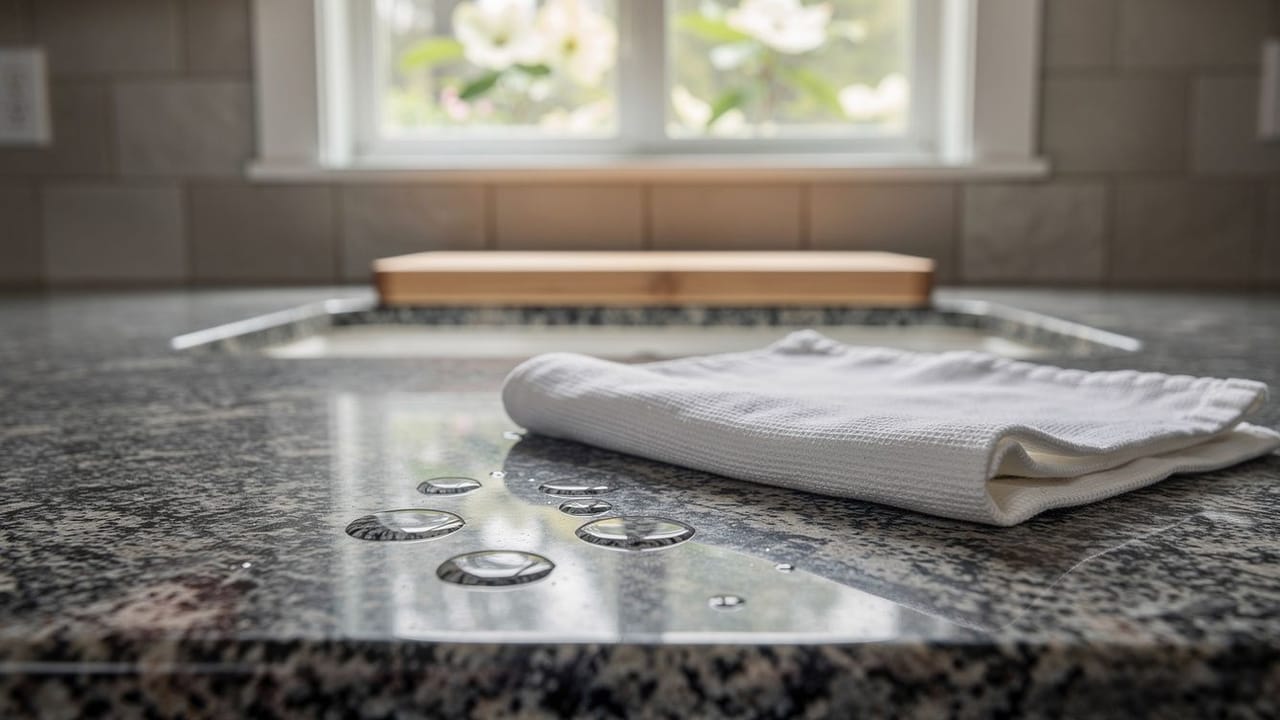
Granite, marble, limestone and travertine are a different conversation, and we decide sealing on them slab by slab rather than by the calendar. Our check is a few drops of water left on the stone for fifteen minutes. If the stone darkens under them, it is taking water in and we seal it; if they bead up and the stone looks the same, we leave it alone.
What damages marble?
The thing to keep off marble is acid. The USGS publication Acid Rain and Our Nation’s Capital shows what rain alone does to it: the calcite grains in marble loosen as their edges dissolve, and the surface goes rough and “sugary.” Vinegar, lemon juice and wine are acids as well, so we tell anyone with marble, limestone or travertine to keep them off the stone and wipe up anything acidic as soon as it lands.
We give granite owners the same advice. We cannot promise how any one slab will react, and nobody should have to find out on their own kitchen counter.
- A water test before resealing natural stone, not a date on the calendar
- No vinegar, lemon or wine left sitting on marble, limestone or travertine
- Warm water, a soft cotton cloth and mild soap on quartz
- No bleach, oven cleaner or harsh scrub pads on quartz
- A hot pad or solid trivet under hot pans on quartz
Quartz has different rules
Cambria’s frequently asked questions describe its quartz as stain resistant and say it never needs sealing or reconditioning. Heat is where it needs care. Cambria says its quartz may not withstand the direct transfer of heat from pots and pans, slow cookers or griddles, and it recommends a closed-weave hot pad or a solid trivet, such as a breadboard, every time.
Cleaning is where quartz and natural stone part ways. A pH-neutral stone cleaner is not what Cambria asks for: its care page warns against strong cleaners whether high, neutral or low pH, lists bleach and oven cleaners among the products to avoid, and says warm water, a soft cotton cloth and a little mild soap are all the routine cleaning it needs. If you are still choosing between the two, our post on matching countertop material to how you cook weighs that up.
How do you get a stain out of stone?
A stain in natural stone has soaked in, so it has to be drawn back out. We start with a poultice, an absorbent paste matched to whatever caused the stain and left on the spot to pull it up into the paste.
A dull patch where acid sat on marble is another kind of damage. Part of the surface has dissolved, the same process the USGS describes in rain, so cleaning will not bring the shine back; that is refinishing work, and deep damage goes to a stone restoration specialist. Chips and cracks are covered in our post on repairing a chipped stone countertop, and if you cannot tell which you have, book a free estimate and we will look at it with you.
Sources
- Cambria, Product Care — Cambria quartz nonporous and nonabsorbent; no sealers, penetrants or topical treatments under any circumstances; no strong cleaners of high, neutral or low pH; avoid bleach and oven cleaners; warm water, soft cotton cloth and mild soap
- Cambria, Frequently Asked Questions — Stain resistant; never needs sealing or reconditioning; may not withstand direct transfer of heat; closed-weave hot pad or solid trivet such as a breadboard
- USGS, Acid Rain and Our Nation’s Capital (E. McGee, 1997) — Calcite grains in marble loosen as their edges dissolve in rain, leaving a rough sugary surface
FAQ
Sealing and Maintaining Stone Worktops — questions
How do I know if my granite needs sealing?
Leave a few drops of water on it for fifteen minutes. If the stone darkens where the water sat, it is taking water in, and that is when we would seal it. If the water beads and the stone looks unchanged, the sealer is still working. We go by that test rather than a fixed yearly schedule.
Can I use vinegar on stone countertops?
Not on marble. A USGS publication on acid rain describes rain alone loosening the calcite grains in marble as their edges dissolve, and vinegar is an acid too. We give the same advice for limestone, travertine and granite. Quartz has its own rule: Cambria warns against strong cleaners of any pH and asks for warm water, a soft cotton cloth and mild soap.
What is the difference between a stain and etching?
A stain is something that has soaked into the stone, and it is the kind of mark we try a poultice on to draw it back out. Etching is acid having dissolved part of the surface, which leaves a dull patch. There is nothing sitting on the stone to clean off, so it needs refinishing rather than a cleaner.
How often should you seal quartz countertops?
Never. Cambria’s care page calls its quartz nonporous and nonabsorbent and says no sealers, penetrants or topical treatments should go on it under any circumstances. That is one maker speaking about its own product, so if your quartz is another brand, follow that maker’s care sheet instead.