
· by Michael Blair, Nashville's Countertops
Edge profile is chosen quickly from a display board and lived with daily. It affects cost, how sharp the corner feels in a busy kitchen, and how easy the edge is to keep clean. Cambria’s guide to thicknesses and edge profiles weighs the same three things for its quartz.
What is the most popular countertop edge?
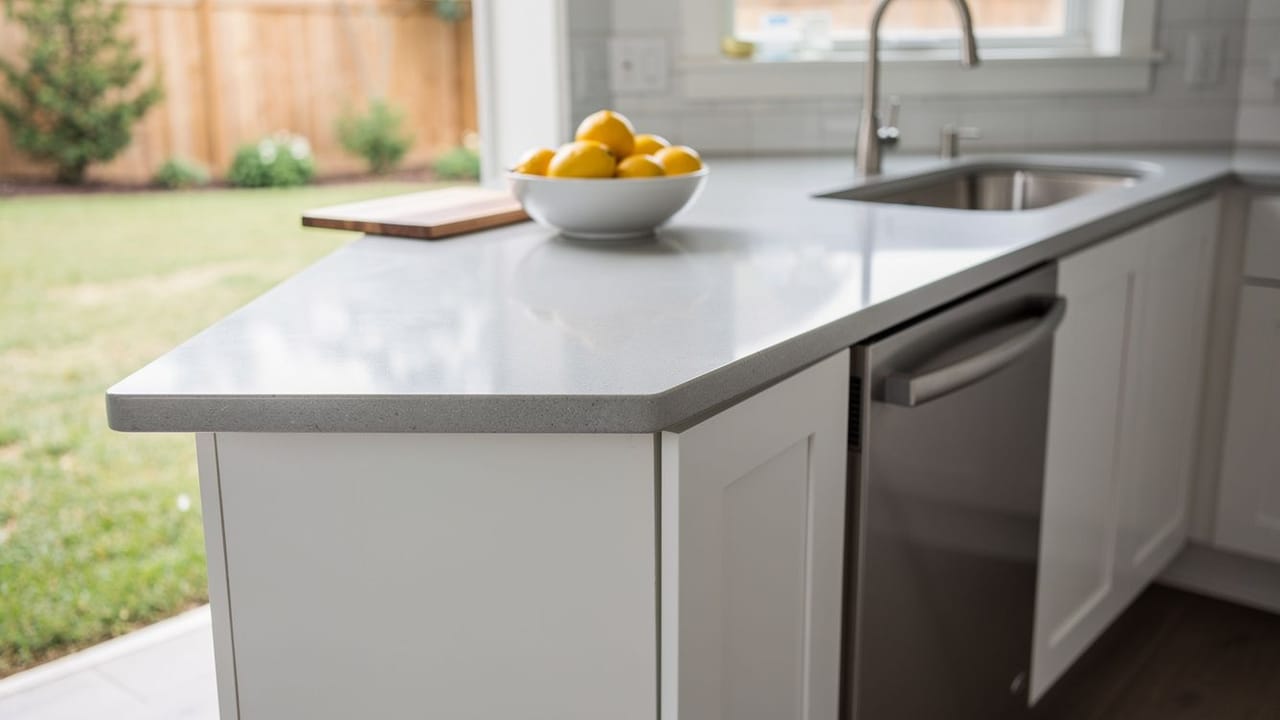
An eased edge is a straight, square line with slightly softened corners, and Cambria calls it the simplest and most popular profile. A true straight edge is sharper again, a clean right angle with almost no rounding. Both read as modern, which is how Cambria’s edge guide places them alongside the bevel.
A bullnose is rounded over the whole edge into one soft curve, while a half bullnose rounds only the top. Ogee is the S-shaped one, a mix of convex and concave curves. Cambria groups ogee and half bullnose with traditional rooms, and it says elaborate edges like ogee can increase costs where an eased edge is the budget-friendly choice. Every one of these is cut in our shop, which is what our edges, sinks and cutouts page covers.
Practical differences
No stone edge is chip-proof. Cambria’s product care page says objects hitting edges, particularly at sinks and dishwashers, may cause chips, and that all stone can be damaged by force. So the edge beside the sink and the dishwasher deserves the most thought, whatever profile you pick. A rounded profile is less likely to feel sharp, though it is no guarantee against a chip either. Caesarstone’s common mistakes guide tells fabricators not to cut sharp edge profiles because impact may cause chipping, and to round or bevel the edge by at least 3 mm (1/8 inch). If a chip has already happened, our post on repairing a chipped stone worktop covers what can be filled.
Cleaning is where the profiles differ most in daily use. Cambria’s advice is that simpler edges like eased or bullnose are easier to clean, while intricate profiles require more upkeep, and a showroom sample that nobody cooks next to never shows you that.
- Eased: square line, softened corners, the most popular and budget-friendly
- Straight: a sharper right angle with almost no rounding
- Bullnose: rounded over the whole edge, no sharp corner
- Ogee: S-shaped and traditional, can increase cost
- Mitered: two pieces joined to look like a thicker top
- Sample edges at full length, not on a small offcut
What is a mitered edge?
A mitered edge is assembled from two pieces of stone joined at a 45-degree angle, and the result looks like a much heavier top than the slab it was cut from. Cambria notes that a mitered edge on a thinner quartz slab creates the illusion of a thicker countertop, which is why it turns up on islands and in our slab and waterfall work.
The thickness you choose limits the menu. Cambria says some intricate or elaborate profiles need a certain thickness to be fabricated properly, so settle the slab thickness before you fall for an edge. A miter is extra cutting and joining, so ask for it priced on its own line of the quote.
Judging it properly
Small display samples make every profile look similar. Ask to see a full-length edge, and run your hand along it before you choose.
If small children will be running past the island, weigh the corners. Cambria’s edge guide calls bullnose edges more family-friendly because they reduce sharp corners in high-traffic areas. When you have a profile in mind, ask us for a free estimate and we will price the edge with the rest of the top.
Sources
- Cambria, Quartz Countertop Thicknesses and Edge Profiles — Profile definitions (eased, straight, bullnose, half bullnose, ogee, mitered at 45 degrees); style, budget, maintenance and family-friendliness of each; mitered edge looks thicker; some profiles need a certain thickness. Quartz only.
- Cambria, Product Care — Objects hitting edges at sinks or dishwashers may cause chips; no stone is chip-proof.
- Caesarstone, Common Mistakes Guide (Master of Stone US) — Sharp edge profiles may chip on impact; edges should be rounded or beveled to a minimum of 3 mm (1/8 inch), preferably 4-6 mm. Caesarstone quartz only.
FAQ
Choosing a Countertop Edge Profile — questions
Which countertop edge is easiest to clean?
A simple eased or bullnose edge. Cambria’s guidance on its quartz is that these simpler edges are easier to clean, while intricate profiles such as ogee require more upkeep. That difference shows up in daily use far more than it does on a showroom sample.
Does the edge profile cost extra?
It can. Pricing is set by the fabricator, so ask for the edge to be priced on the quote. Cambria says elaborate edges like ogee or waterfall can increase costs, while an eased edge is the budget-friendly option. A mitered edge means cutting and joining a second piece, so get its price in writing before you decide.
Is a square edge a bad idea with children?
It is worth weighing. Cambria describes bullnose edges as more family-friendly because they reduce sharp corners in high-traffic areas. A half bullnose rounds only the top edge, so if you like a slimmer look, feel a full-length sample of each before you choose.
What is a bullnose edge?
A profile rounded over the whole front of the countertop into one soft curve, leaving no sharp corner. A half bullnose rounds only the top. Cambria calls bullnose more family-friendly because it cuts down on sharp corners where people pass, and counts it among the simpler edges that are easier to clean.